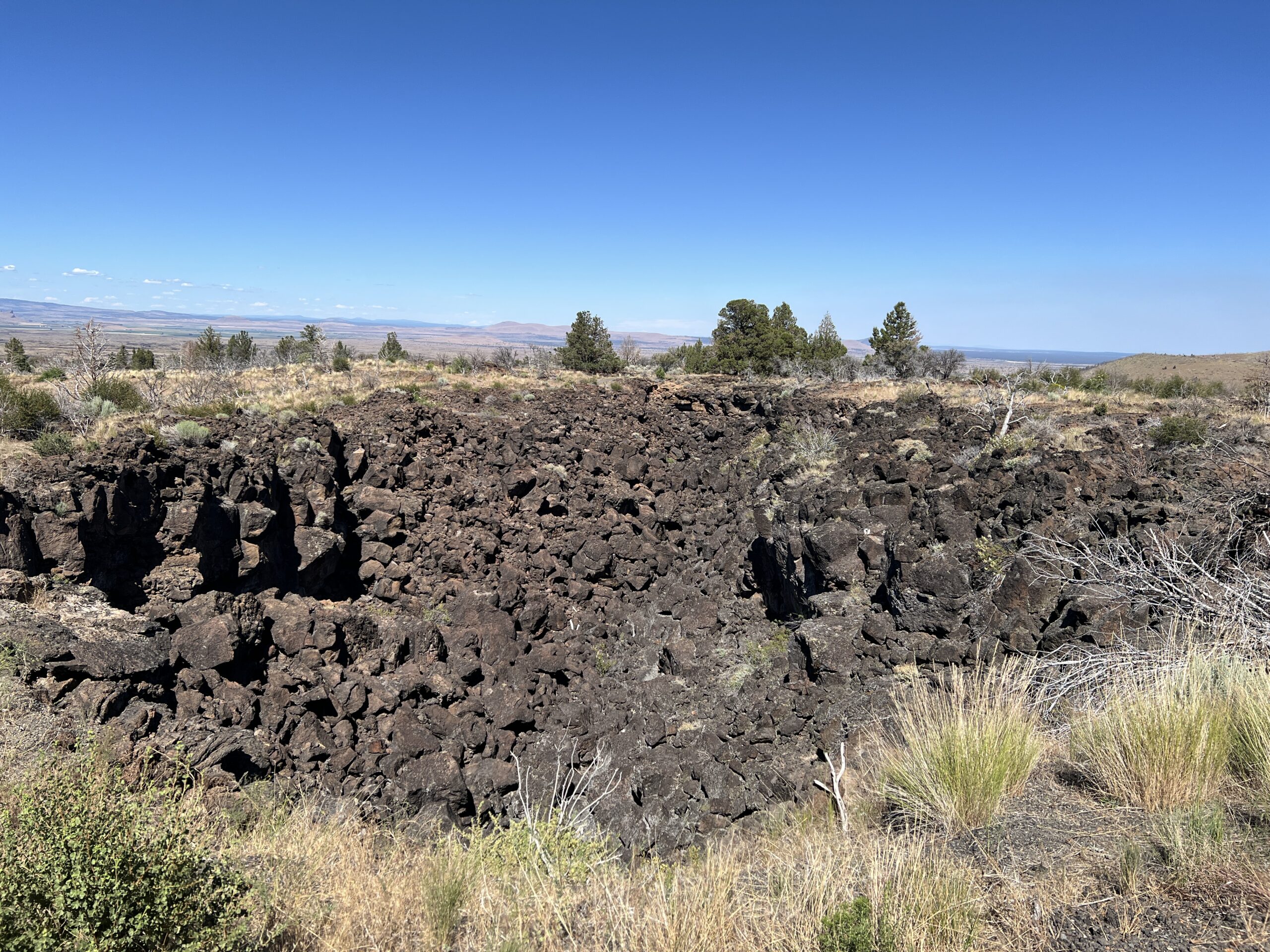
Few places in the American West feel as otherworldly as Lava Beds National Monument. Located on the northeastern flank of the massive Medicine Lake Volcano—the largest volcano by area in the Cascade Range—this rugged landscape is shaped almost entirely by ancient basalt lava flows stretching back nearly two million years.
It’s a place where you can hike across hardened volcanic rock, descend into lava tubes formed by flowing magma, and walk through one of the most significant Native American historical sites in the region—all in a single afternoon.

A Landscape Born From Fire
The geology here is what first stops most visitors in their tracks. Roughly 90% of the monument is made of basalt, formed from repeated volcanic eruptions over thousands of years. As lava cooled and drained away, it left behind an intricate underground network of caves and tubes—some open for exploration today.
What you see at Lava Beds is not just old lava. It’s a frozen record of volcanic activity that shaped the entire region.

From Exploration to Protection: The Story Behind the Monument
The preservation of Lava Beds is thanks in large part to J.D. Howard, a miller from Klamath Falls, Oregon, who began exploring the caves in 1917. Recognizing their scientific and natural importance, he worked to bring attention to the site and urged the U.S. Forest Service to protect it.
His efforts paid off. In 1925, President Calvin Coolidge officially established the national monument, ensuring these lava tubes would be preserved for future generations.
Visiting with a One-Year-Old: A Different Kind of Adventure
We visited Lava Beds with our one-year-old daughter, which shaped our experience in a very different (and memorable) way. While the caves limited how far we could explore, she absolutely loved the open landscape, unusual plants, and wide open hikes.
Her favorite part of the entire visit was walking the trails at Captain Jack’s Stronghold in her Osprey carrier—surrounded by lava rock walls and sweeping views of this dramatic terrain.

Exploring the Lava Tubes: 27 Caves to Discover
One of the most unique experiences at Lava Beds is exploring its 27 marked lava tubes, many located near the visitor center.
When you arrive, rangers issue a caving permit and help guide you toward caves that match your comfort level. Each cave is rated by difficulty, making it easy for beginners and experienced explorers alike.

What to know before you go:
- Bring a strong flashlight or headlamp (it gets completely dark underground)
- Wear sturdy shoes with good grip
- Follow park guidance to protect bats from White-Nose Syndrome
- Avoid wearing clothing that has been in other caves
The rangers here are incredibly helpful and make sure you’re set up for a safe and memorable experience.
Mushpot Cave: The Best First Stop
We started with Mushpot Cave, the easiest and most accessible lava tube in the monument—and the only one with electric lighting.
A paved walkway leads you underground, where interpretive signs explain the cave’s features. It’s the perfect introduction to lava tube geology.
There is one low section where you’ll need to duck slightly, but otherwise it’s very beginner-friendly and ideal for families.

Sentinel Cave: A Step Further Into the Lava
Next, we explored Sentinel Cave, which offers both upper and lower entrances. While still considered one of the easier caves, it feels more adventurous than Mushpot thanks to uneven terrain and scattered rock debris.
It’s a great “next step” cave for visitors who want something slightly more rugged without committing to a difficult route.

Captain Jack’s Stronghold: A Powerful Piece of History
Beyond its geology, Lava Beds is also a place of deep historical significance tied to the Modoc people.
This landscape was central to the events of the Modoc War (1872–1873), when a small group of Modoc warriors led by Kintpuash—known as Captain Jack—took refuge in the lava beds after refusing relocation from their ancestral lands.
The Modoc used the natural maze of lava formations as a defensive stronghold against U.S. Army forces. Despite being heavily outnumbered, they used the terrain to their advantage for months during the harsh winter.
Today, the Captain Jack’s Stronghold Trail winds through this same rugged maze of basalt walls, caves, and pits once used for shelter and defense. Walking here gives a powerful sense of how the landscape itself shaped history.

Hiking the Stronghold Trail
The trail offers two loop options—short and long—both weaving through the lava formations used during the conflict.
A few things to keep in mind:
- Expect uneven terrain
- There is little to no shade
- Bring plenty of water
- Wear sunscreen and sturdy shoes

Why Lava Beds Belongs on Your Travel List
Lava Beds National Monument is one of those rare destinations where geology, history, and adventure overlap completely. In a single visit, you can:
- Walk through ancient volcanic tubes
- Explore caves formed by flowing lava
- Learn Native American history tied to the Modoc people
- Hike a surreal, high-desert volcanic landscape
It’s rugged, quiet, and unlike anywhere else in the National Park system.
Plan Your Visit
If you’re looking for a destination that feels off the beaten path—but still deeply meaningful—Lava Beds delivers an unforgettable experience.
For more travel stories, guides, and national park adventures, visit Land of Liberty Explorers and follow along on Pinterest for more inspiration.
Click here for more Land of Liberty Explorers!
Be sure to follow us on Facebook and Pinterest!


Updated June 19, 2026